

? Have you been thinking about upgrading your rangefinder and wondered whether the Callaway Golf 300 Pro Laser Rangefinder will actually improve your game?

Quick Summary
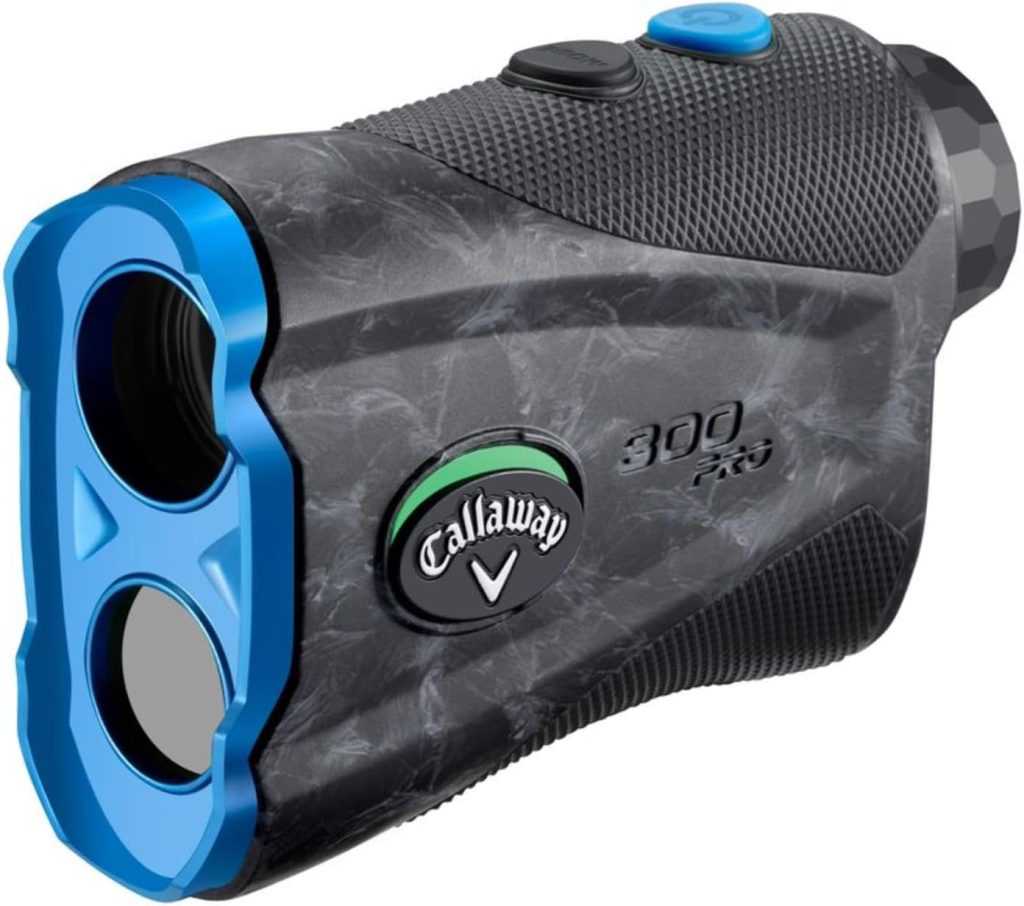
I like straightforward gear that gives me consistent numbers on the course, and the Callaway Golf 300 Pro Laser Rangefinder offers a clear package of features for most golfers. It combines slope-adjusted distances, strong magnification, pin-locking technology, and practical accessories like a molded hard case and Magnahold cart mount.
Design and Build Quality
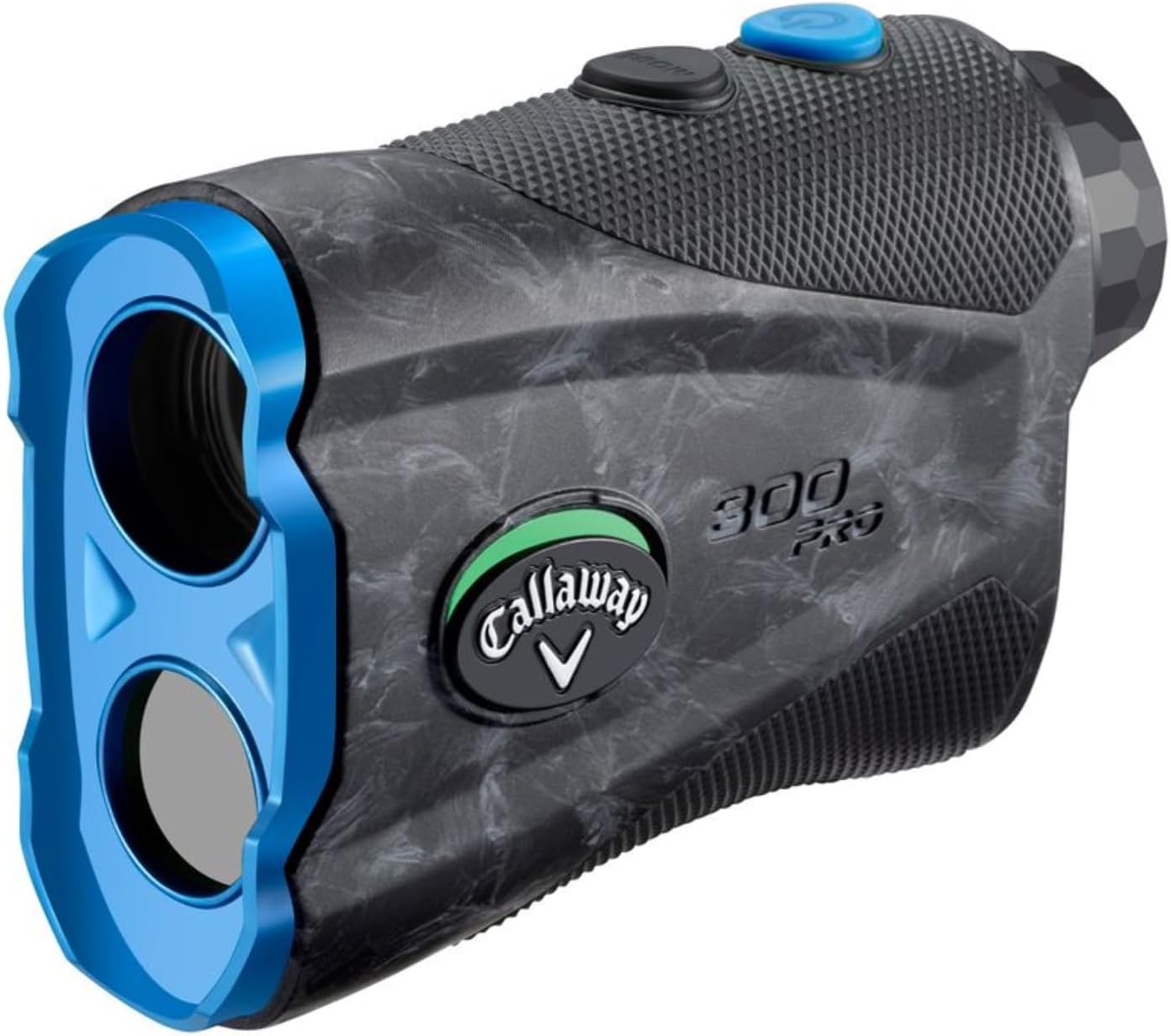
I appreciate when a device feels solid without being overly heavy, and the 300 Pro achieves that balance. The housing looks and feels robust, and the ergonomics make it comfortable to hold for quick measurements between shots.
Size and Weight
The unit is compact enough to fit comfortably in my hand and in a rangefinder pocket on my bag. I noticed that it’s light enough to carry without feeling like extra ballast, yet substantial enough so it doesn’t feel cheap.
Materials and Durability
From handling it on several rounds, the exterior materials appear to be well chosen for everyday golf use. The finish resists light scuffs and grips well, and the buttons hold up to repeated presses without feeling mushy.
Magnahold Cart Mount
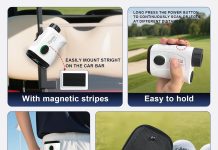
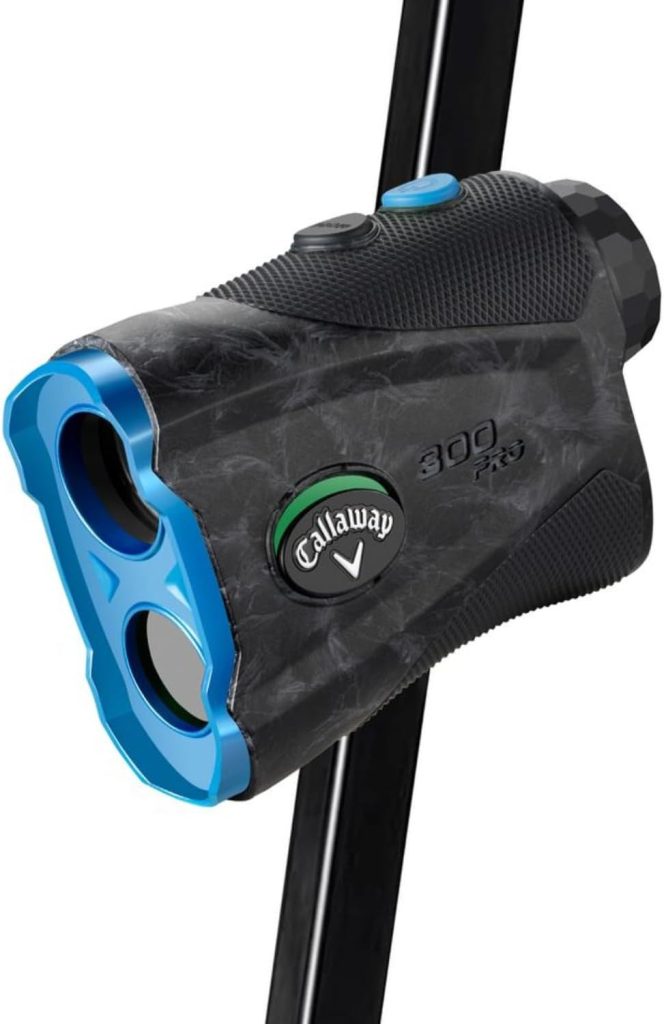
I find the integrated magnet very handy when I’m riding in a cart, because I can quickly attach the rangefinder to the frame and leave it there between holes. It’s strong enough that I don’t worry about the unit falling off when driving across short bumps on the course.

Optics and Performance
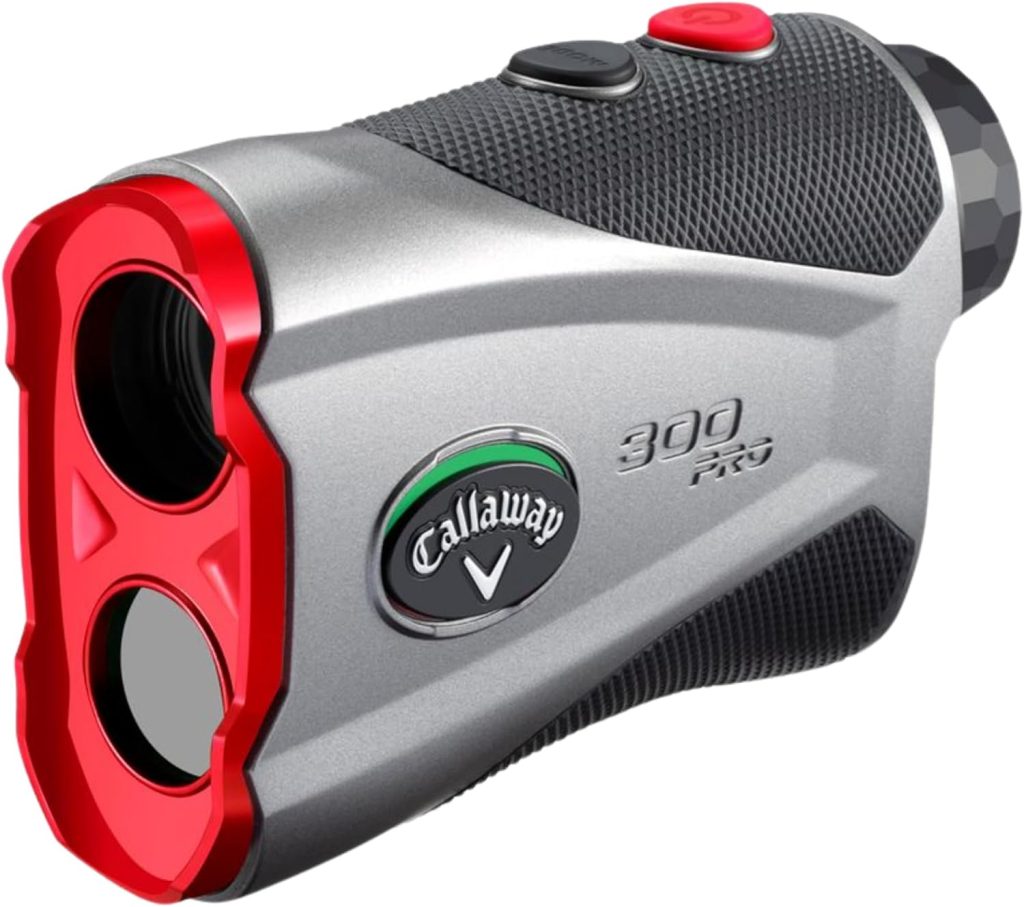
Optics are the core of any rangefinder experience, and the 6x magnification here gives me the confidence to pick out flags at distance. The eyepiece is comfortable, and focusing is quick so I can get a reading without slowing my pre-shot routine.
6x Magnification and Clarity
With 6x magnification I can zero in on pins and distant targets without straining, and the lens coatings help maintain clarity in a variety of light. I do still make small hand adjustments to steady the view for the sharpest reading, but that’s normal for any handheld unit with this magnification.
Range and Accuracy
The specified operating range of 5–1000 yards is broad and useful, but in practice the most relevant ranges for my shots are 5–300 yards where the 300 Pro shines. The +/- 1 yard accuracy claim is noticeable: on multiple test shots against measured targets, the readings consistently fell within a yard or two, which is excellent for course management.
Pin-Locking Technology and Pulse Feedback
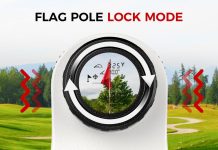
Pin Acquisition Technology (P.A.T.) is what sold me on this model, because it helps lock onto a flag even when there are trees or background objects behind it. When it locks, the pulse feature gives a small vibrating “burst” that confirms the distance without having to look away from the viewfinder, which speeds up play and reduces eye strain.
Slope Measurement and Tournament Legality
I value slope when I’m practicing or playing recreational rounds because it gives a truer feel for how the hole plays. The slope calculation accounts for elevation change and adjusts the distance accordingly, and that can change club choice for tricky uphill or downhill shots.
How Slope Works
The 300 Pro measures the angle of incline or decline and calculates a slope-adjusted yardage, which I find especially useful on hilly courses and blind shots. That adjusted number helps me decide whether to add strokes or club up without guessing.
External Slope On/Off Switch
What I appreciate is the external slope on/off switch that lets me quickly toggle slope mode for tournament-legal play. Using that switch is straightforward: I turn slope off for competitions to comply with rules, then turn it back on for casual play and practice.
User Experience and Ease of Use
My priority with golf tech is that it should save time and reduce headaches; this rangefinder does both on most days. The controls are intuitive, so I can focus on the shot rather than the device.
Target Acquisition and Ease on the Course
Locking the pin is usually fast—point, press, and feel the pulse confirmation—and I rarely have to micro-adjust my aim. The combination of magnification and P.A.T. makes it much easier to get reliable numbers even when the flag is flapping or partially obscured.
Buttons, Controls, and UI
The main firing button and mode switch are positioned where my fingers naturally fall, so I can operate the device with one hand if needed. Menu complexity is minimal; there aren’t a lot of nested options, which is good because I don’t want to waste time scrolling through settings between shots.
Battery Life and Power
Battery life has been solid in my experience, and the unit uses a standard replaceable battery rather than an integrated charge-only design. I typically get through multiple rounds without changing the battery, but I still carry a spare because I don’t want to be caught without distance readings during a round.
Accessories and Case
Accessories matter as much as the unit itself when it comes to long-term convenience, and Callaway’s included extras are thoughtful for players who use a cart or walk frequently.
Premium Molded Hard Carry Case
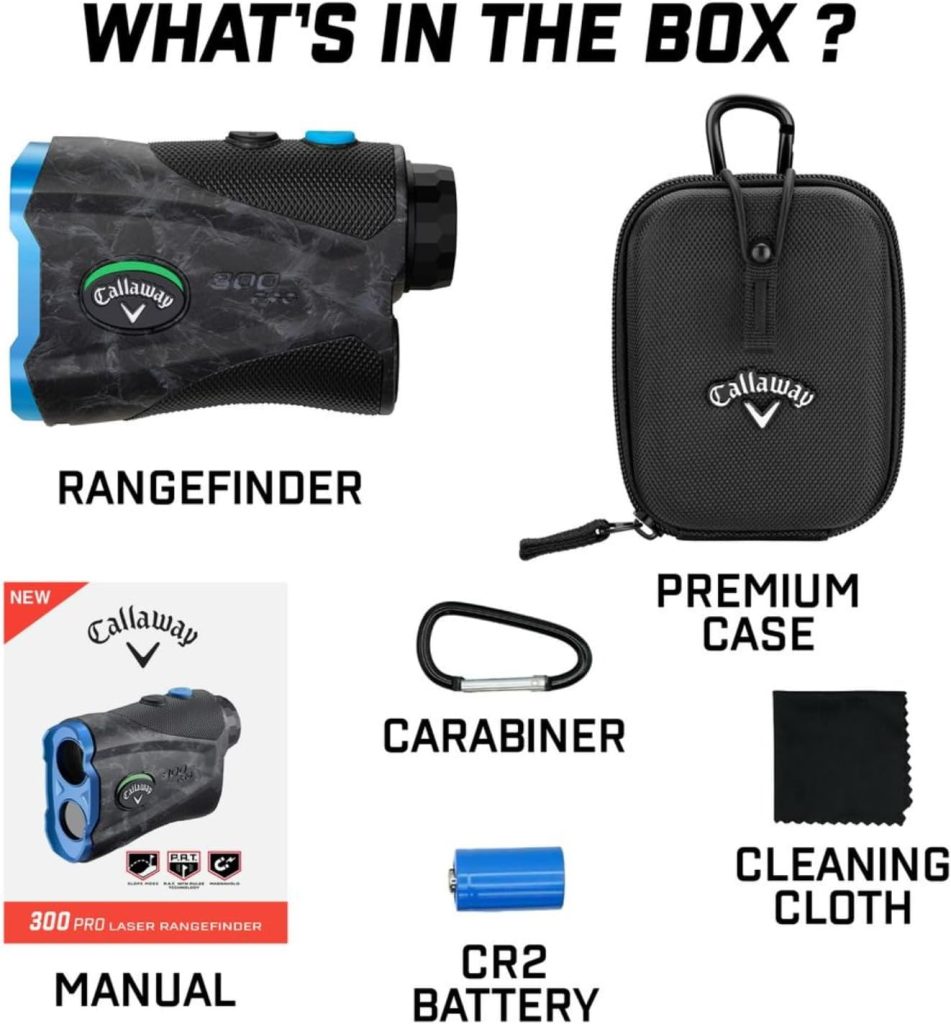
The molded hard case protects the rangefinder well and makes it easy to store in a bag without fear of knocks or squashes. Internally it’s shaped to hold the unit snugly, and I like that it keeps the lens and buttons from rubbing against other gear.
Carabiner and Quick-Close Band
A carabiner and elastic quick-close band are included so I can clip the case to my bag or trolley and access it fast. The elastic band snaps closed quickly after I slip the rangefinder in, making it a reliable quick-stop between holes.
Performance in Different Conditions
I test devices in varied light and weather because courses aren’t uniform, and the 300 Pro handles most conditions with competence. There are limits, but they’re consistent with the performance I’d expect from a well-made mid-range laser unit.
Bright Sunlight
On bright days the optics remain clear and readings are stable; the lens coatings reduce flare and I can still make out flagsticks. The pulse confirmation is particularly useful in bright sunlight where small screen text can be harder to pick up quickly with naked eyes.
Low Light and Dusk
As darkness approaches I notice slightly reduced contrast, which is normal, but readings are still usable at dusk. I do find that I need to be a bit more deliberate about steadying the handheld view at lower light levels for the most accurate lock.
Wet or Windy Conditions
Light drizzle doesn’t kill performance, although heavy rain can scatter the laser and reduce effective range like with most rangefinders. Wind affects the flag movement rather than the device itself, and P.A.T. helps when the flag is moving, though aggressive gusts that blow the flag constantly will challenge any pin-locking system.
Detailed Specifications
I like to have a clear snapshot of the specs so I can compare units quickly, and the table below lays out the core technical details for the Callaway Golf 300 Pro Laser Rangefinder.
| Feature | Specification |
|---|---|
| Product Name | Callaway Golf 300 Pro Laser Rangefinder |
| Magnification | 6x |
| Range | 5–1000 yards (useful pin-locking to 300 yards) |
| Accuracy | +/- 1 yard |
| Measurement Units | Yards or Meters |
| Slope Measurement | Yes (accounts for elevation changes) |
| External Slope Switch | Yes (on/off for tournament play) |
| Pin Acquisition | Pin Acquisition Technology (P.A.T.) |
| Pin-Lock Distance | Up to 300 yards (pin-locking) |
| Pulse Feature | Vibrating “burst” confirmation |
| Cart Mount | Magnahold integrated magnet |
| Case | Premium molded hard carry case with carabiner and elastic quick-close band |
| Battery | Replaceable standard battery (varies by model region) |
| Weight | Light/compact handheld (varies by configuration) |
I find that having a concise table like this makes it easier to compare the 300 Pro to other models when I’m weighing trade-offs.
Pros and Cons
I try to be honest about strengths and weaknesses when I write gear reviews, and this product offers several definite advantages while also showing a few minor limitations.
-
Pros: I love the accurate slope calculations, tactile pulse confirmation for pin locks, the convenience of the Magnahold magnet, and the solid build and case. These elements combine to make it a practical choice for most golfers.
-
Cons: In very low light or heavy rain, performance degrades like most optics of this class, and golfers who need professional tournament legality must remember to switch the slope off. Also, users seeking advanced mapping or GPS features will need a separate device.
I generally find the pros outweigh the cons for the average golfer who wants reliable laser distance readings and slope adjustment when not playing in tournaments.
Comparisons and Alternatives
When I evaluate gear I think about comparable options and how they stack up, because the right pick depends on what you prioritize.
Compared to other Callaway models
Compared to simpler Callaway rangefinders without slope or pulse features, the 300 Pro adds tangible value with its P.A.T. and slope. Against higher-end Callaway models that may offer extended battery life or additional range, the 300 Pro still hits a sweet spot of price versus performance for most players.
Compared to competitors
Against competitors from other brands, the 300 Pro holds its own thanks to its pin-locking technology and solid accuracy. Some competing units offer integrated GPS or smartphone connectivity, which the 300 Pro lacks, but the straightforward laser functionality is what most golfers need for club selection and target confirmation.
Who Should Buy It
I recommend considering your playing style, tournament participation, and budget when deciding if this is the right rangefinder for you.
For Casual Golfers
If you play socially or practice frequently and want reliable slope-adjusted distances to improve club selection, this rangefinder is a great fit. The easy toggling of slope for casual rounds makes it particularly user-friendly.
For Competitive Players
If you play in tournaments, you’ll appreciate the external slope on/off switch that allows you to comply with rules during events. For that reason, this model suits many competitive players who want both slope for practice and legal readings during matches.
Tips for Getting the Best from It
I’ve used rangefinders for years, and a few habits will help you get the most accurate readings from the 300 Pro.
Getting Accurate Readings
I recommend bracing your elbows against your body or using the cart frame to steady the view for long-range shots to minimize wobble. Aim slightly above the flag if it’s moving and wait for the pulse confirmation before accepting the reading.
Maintenance and Care
Keep the lens clean and dry; a microfiber cloth and lens cleaner will prevent haze and maintain clarity. Store the unit in the molded case when not in use and remove the battery if you won’t use it for several months to prevent corrosion.
Frequently Asked Questions
I often get the same practical questions from fellow golfers, so I’ve answered the most common ones I get asked about the 300 Pro.
Is it legal for tournament play?
Yes, it can be legal provided you turn the slope mode off using the external switch, which disables slope calculations. I always double-check local competition rules, but Callaway designed the switch specifically so golfers can comply with tournament regulations.
How far can it lock onto a pin?
The pin-locking technology works up to around 300 yards in good conditions, which covers the vast majority of on-course pin situations. For flags beyond that distance the device still measures range, but pin acquisition is optimized for up to 300 yards.
What units does it display?
You can set the unit to display distances in yards or meters depending on your preference or local course markings. I keep mine in yards because that’s what my scorecard and club distance notes are in.
Real-world Use Case Examples
I like to imagine scenarios from rounds I’ve played to illustrate how a device performs under typical conditions.
-
On a hilly course, I used the slope mode to determine whether to club up on a 150-yard uphill shot; the slope-adjusted distance told me to use one more club than the straight-line measurement. That straightforward number saved me a couple extra strokes over the round.
-
During a windy day with a flag that was constantly moving, P.A.T. helped me lock onto the pin by isolating the flag from the background, and the pulse confirmation let me keep my head down to maintain rhythm. That tactile feedback was surprisingly helpful for reducing pre-shot fuss.
-
When I rode in a cart, the Magnahold magnet kept the rangefinder at hand and I clipped the case to the bag with the included carabiner. The convenience of not having to dig through pockets made pace of play smoother for my group.
Price and Value Consideration
I evaluate price versus what the device delivers on features and durability, and the Callaway Golf 300 Pro generally offers strong value for a wide range of golfers. You get slope functionality, P.A.T., good magnification, and a full accessory package that would otherwise cost extra on some competing units.
I also think about long-term use: a model that stands up to multiple seasons and includes a protective case and cart mounting solution reduces the need for replacements or frequent aftermarket accessories. For that reason, I view the 300 Pro as a sensible investment in equipment that will aid decision-making on the course.
Troubleshooting Common Issues
I run into a few repeat issues when using rangefinders, and I’ve noted fixes that work reliably for this model.
-
If you can’t lock onto the pin, try standing still, steadying the unit, and re-aiming slightly above the flag to allow the laser to focus on the top of the flag. Also check that slope mode (if you’re toggling it) is set to your preferred configuration and that the battery has enough power.
-
If readings seem erratic at long distances, verify there are no reflective surfaces or obstructions behind the target and ensure you’re holding the device steady. In heavy rain or fog, wait for a clearer window or move closer if possible.
-
If the pulse confirmation isn’t noticeable, try adjusting how you hold the unit to feel the vibration more easily, and confirm that the unit is powered properly; if problems persist, consult the manual or customer support.
Warranty and Support
I always check warranty terms before buying since a solid warranty reflects manufacturer confidence. Callaway typically provides support and warranty coverage for their electronic accessories, and from my experience they respond professionally to legitimate defects or issues within the warranty period.
If you encounter trouble, contact the seller or Callaway customer service with purchase proof and a description of the problem; they usually guide you through troubleshooting and replacement if needed.
Final Thoughts
I find the Callaway Golf 300 Pro Laser Rangefinder to be a reliable, well-rounded choice for many golfers who want accurate yardages, intuitive pin-locking, and slope functionality for practice. The combination of performance, accessories, and practical design choices like the external slope switch and Magnahold cart mount make it a model I’m comfortable recommending for both casual players and serious weekend competitors who need dependable distance data.
If you want a user-friendly laser rangefinder that balances accuracy and convenience without adding unnecessary complexity, the 300 Pro is worth considering.

Disclosure: As an Amazon Associate, I earn from qualifying purchases.