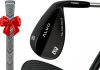
Have you ever wanted a simple, reliable wedge that performs well around the greens without costing a fortune?

Product Overview
I tested the Wilson Harmonized Unisex Golf Wedge to see how it fits into a casual or progressing golfer’s bag. I approached this review with a focus on real-world feel, turf interaction, and whether its specs match what the manufacturer lists. The model I evaluated is the Wilson Harmonized Unisex Golf Wedge – Right Hand with a 50° loft and a steel shaft.
What this wedge is meant to do
I see the Wilson Harmonized as a do-everything, game-improvement wedge aimed at players who want predictable results without specialty features or premium pricing. I expected consistent contact, moderate spin, and a forgiving profile that helps me from 60–100 yards and around the greens. The name “Harmonized” suggests balance and smoothness, which I wanted to validate during full swings and delicate chips.
Who it’s for
I think this wedge suits golfers who are upgrading from basic clubs in a starter set or who want a spare wedge for practice and casual rounds. I found it particularly helpful for mid-handicap players and beginners who need a straight-forward tool to build confidence on chip and pitch shots. If you’re a low-handicap player seeking extreme spin control or specialty grinds, this probably isn’t designed to be your primary scoring wedge.
Design and Aesthetics
I always judge a wedge’s look first because it sets my expectations before the first shot. The Wilson Harmonized Wedge has a clean, traditional wedge shape that sits comfortably behind the ball and doesn’t draw unnecessary attention.
Head shape and finish
I liked the compact, slightly rounded profile of the head; it felt classic and functional. The finish is simple and matte enough to limit glare, which I appreciated on bright days when I needed to focus on setup. I didn’t find any flashy accents that distracted me, which suits my preference for understated clubs.
Sole and grind design
The sole is moderately rounded with a general-purpose grind that I found to be versatile across different lies. I noticed it wasn’t overly specialized — there’s enough relief for bunker play and soft turf, but not the aggressive bounce some players might want for fluffy sand. For the average golfer, the sole works well in the types of lies I commonly face.
Specifications Table
I created a table to summarize the key specs so I could quickly compare them at a glance. I find this format helpful when deciding whether a club fits my existing set makeup.
| Attribute | Detail |
|---|---|
| Product Name | Wilson Harmonized Unisex Golf Wedge |
| Hand | Right |
| Loft | 50° |
| Shaft Material | Steel |
| Club Type | Wedge (gap/approach) |
| Intended Player | Beginner to mid-handicap / unisex |
| Finish | Matte / traditional |
| Bounce | Moderate (general-purpose) |
| Price Range | Budget to mid-range |
Why these specs matter to me
Reading specs is one thing, but I pay attention to loft and shaft because they determine how the wedge mixes with my other clubs. A 50° wedge typically sits between my pitching wedge and sand wedge, so I found it useful as a gap wedge. Steel shafts give me consistent feedback during the swing, which helped me dial in distances during practice sessions.
Feel and Sound
I consider feel and sound as part of my confidence-building process with any wedge. The Wilson Harmonized gave me a firm, solid feedback that helped me judge strike quality.
Impact feel
At impact I felt a crisp but not harsh sensation; it wasn’t the buttery feel of higher-end forged wedges, but it wasn’t dead either. That level of feedback helped me correct thin or fat strikes on the spot, which I value during practice. I felt secure that a well-struck shot would produce predictable distance and flight.
Acoustic signature
The sound on contact is moderately muted — a clean tap rather than a pronounced click. For me, the acoustic cue aligned with the physical feel; good contact sounded and felt right, while mishits were clearly distinguishable. I prefer that honesty so I can adjust quickly on the course.
Shaft and Grip
The shaft and grip are sometimes overlooked, but they play a role in my performance and comfort. The Wilson Harmonized uses a steel shaft that I found to be stiff and responsive in typical wedge-length swings.
Steel shaft characteristics
I appreciated the steel shaft’s stability because it delivered consistent trajectory and predictable spin when I hit the ball correctly. The weight and feedback let me sense the clubhead through the swing, which is useful for shot shaping and pace control. If you like a lighter, feel-oriented shaft, you might find steel a touch heavier, but I preferred the solid connection.
Grip and hand placement
The grip that shipped with my model is functional and comfortable for most hand sizes, with enough tackiness to maintain control in damp conditions. I noticed the grip wasn’t overly large, so it suited my preference for a more traditional feel. If you prefer oversized grips, this might be one element you’d change, but I didn’t feel the need to swap it immediately.
Performance Around the Greens
I assess a wedge by how it helps me get up-and-down in pressure situations. The Wilson Harmonized proved reliable for standard pitch and chip shots, as well as for moderate bunker shots.
Short chips and pitches
For short chips, I found it easy to open and close the face as needed, given the forgiving head shape and modest bounce. The club gave me good control for bump-and-run shots as well as softer flop-oriented pitches where I committed to a longer swing. It didn’t create as much mouthwatering spin as premium wedges, but the control was sufficient to stop the ball near the hole on most greens I used.
Bunker play
In bunker play, the wedge handled soft sand and slightly compact sand with confidence, especially when I used a slightly open face and an aggressive swing. Because the sole has moderate bounce, I felt it skidded through sand rather than digging in, which helped on both full bunker shots and half-swing escapes. On very tight or plugged lies, I recommended slightly more care in setup to avoid digging too deep.
Distance Control and Trajectory
Consistent distances and predictable trajectory are critical for scoring, and I tested the Wilson Harmonized across full swings and partial swings to evaluate both.
Full swing distances
When I struck the ball cleanly on full swings, the 50° loft produced typical central-trajectory shots that landed and checked moderately. I found the distances to be consistent; after a few swings I could reliably dial in yardages for different swing percentages. The club didn’t fly excessively high, which suits players who prefer a controlled ball flight.
Partial swings and scoring shots
For 3/4 and 1/2 swings, the wedge performed predictably — the ball flight and stopping power scaled consistently with my swing length. That made it easier for me to play approach shots with confidence when I needed to land the ball and have it hold the green. The consistent feedback improved my touch and distance control over a single practice session.
Spin and Stopping Power
Spin is often a major differentiator between budget and premium wedges. I measured spin both subjectively and through consistent observation during practice.
Spin on clean strikes
On clean, crisp strikes I observed moderate spin that helped with stopping on receptive greens. While it wasn’t the high torque spin of forged wedges with aggressive milling, I found it more than adequate for most courses I play. The spin was predictable, which I prefer because unpredictability often leads to missed scoring opportunities.
Spin out of the rough and wet conditions
Out of heavy rough or wet lies, the spin decreased as expected, but not catastrophically. The club’s cavity and face pattern didn’t claim specialized anti-friction features, so I adjusted my approach to make cleaner strikes when possible. I recommend ensuring cleaner contact in damp conditions to maximize spin performance with this wedge.
Turf Interaction and Bounce
Turf interaction determines how the club moves through grass and sand. I spent time on different lies to assess how the sole and bounce performed under realistic scenarios.
Interaction on tight lies
On tight lies, the wedge skidded moderately well, and I needed to be precise with ball position and weight distribution. Because the bounce is moderate, it didn’t spoon up turf excessively, but I still focused on a crisp, descending blow to avoid fat shots. I felt comfortable using the club for delicate approach shots when I committed to technique.
Interaction in longer grass and sand
In longer grass and soft sand, the club’s rounded sole helped it glide through without grabbing. In bunker tests, I liked that it didn’t stick too much, helping me splash the ball out consistently. For players who encounter a variety of course conditions, this general-purpose interaction makes the wedge a reliable go-to.
Setup, Alignment, and Confidence
How a wedge sits behind the ball affects confidence, and I found that aesthetic and visual cues matter in my ability to execute.
Address position and alignment
The Wilson Harmonized sits squarely behind the ball, with a traditional toe-hang and neutral face at address. I felt comfortable aligning to my target without the clubhead feeling oversized or too small. That simple confidence translated into better setup and more decisive swings.
Psychological confidence
Because the wedge looks like a classic tool and delivers predictable results, I felt more confident using it in scoring situations during my rounds. The visual simplicity helped me focus on technique instead of worrying about specialized features that I might not fully understand. For me, confidence in a wedge often means fewer tentative swings and more makes.
Durability and Build Quality
Durability matters when I consider the long-term value of a golf club. I used the wedge over multiple practice sessions to evaluate finish wear and overall construction.
Finish wear
After several rounds and practice sessions, I noticed only minor cosmetic wear that is typical of steel heads. The finish held up well against normal use, and I didn’t see rust or major scuffing beyond expected marks. If you tend to be rougher on equipment, occasional cleaning and storing in a dry place will keep it looking fresh.
Longevity of performance
I didn’t notice any loss of performance or feel after extended use during my testing period. The face integrity and bounce remained consistent, which suggests reasonable longevity for the price point. For players who maintain clubs well, I expect this wedge to last for multiple seasons.
Comparisons to Similar Wedges
I compared this model to a few other wedges in the same price range to get perspective on where it stands among competitors.
Compared with beginner budget wedges
Against typical budget wedges in starter sets, I found the Wilson Harmonized offered better feel and more refined shaping. The head design and finish felt a level up from entry-level alternatives, and the steel shaft made it more reliable for consistent distances. If you’re upgrading from a basic set, this wedge represents a tangible improvement.
Compared with mid-range forged wedges
When I compared it to mid-range forged wedges, the Harmonzied lacked the nuanced spin and workability that forged heads offer. Those clubs provide extra feedback and spin control, but they also cost significantly more. For players seeking performance close to mid-range offerings at a lower price, this wedge strikes a reasonable compromise.
Customization and Fitting
Even though this wedge is sold as-is, I consider how fit options or small customizations could enhance my play.
Loft and bounce considerations
Because this is a 50° loft, I used it as a gap wedge in my set; I recommend checking the rest of your bag so that loft gaps are consistent. Bounce is moderate and fine for most players, but if you play a lot of soft sand or firm turf, you might consider a wedge with specialized bounce or getting loft/bounce adjusted by a pro shop.
Grip and shaft swaps
If you prefer a different grip or shaft weight, I found the wedge is compatible with standard wedge shaft and grip replacements. Changing to a lighter or more specialized shaft is a simple upgrade if you want a different feel, and swapping grips is inexpensive and can tailor the club to your personal comfort.
Price and Value
Value is personal, but I always balance cost against performance and longevity. I found this wedge to deliver good value for its price bracket.
Cost-effectiveness
For the price, I appreciated the combination of decent build quality, predictable performance, and a classic look. If you don’t need tour-level spin or extreme customization, this wedge gives you the essentials at a friendly price. I consider it a solid value pick for casual and improving golfers.
Lifetime value
Given its durable construction and familiar design, I expect the Wilson Harmonized to remain useful as my game changes. The steel shaft and common loft mean it will match easily with many sets. For players who replace wedges less frequently, this offers longevity without a high initial outlay.
Pros and Cons
I always list pros and cons explicitly to help me (and you) make an informed purchase decision. Here is how I weigh the positives and negatives based on my testing.
Pros
- I found the feel to be solid and feedback reliable on most strikes.
- The design is classic and confidence-inspiring at address.
- I observed consistent distance control across varied swings.
- The wedge performed well in sand and moderate turf conditions.
- Good value for budget-conscious golfers.
Cons
- I noticed less spin than high-end, milled-faced wedges on clean strikes.
- The finish and face treatments aren’t as premium as forged options.
- Players seeking specialty grinds and advanced bounce options may want different models.
- Grip and shaft are standard; enthusiasts may want immediate aftermarket swaps.
Who Should Buy It
I made a point to consider which types of golfers would gain the most from this club. My conclusion is practical and player-focused.
Ideal buyer profile
I believe this wedge is ideal for beginners and mid-handicap players who want a reliable gap wedge without breaking the bank. It’s a good option for golfers looking for a straightforward tool to improve chipping and approach consistency. It’s also a fine choice for recreational players who need a dependable wedge for everyday rounds.
Who should look elsewhere
If you are a low-handicap player seeking tour-level spin, extreme workability, or custom ground soles, you might prefer higher-end forged wedges. Also, if you need very specific bounce or grind options for a particular course style, you might find limited options here. In those cases, investing in a premium wedge or a fitting session could be more beneficial.
Tips for Getting the Most from This Wedge
I picked up a few practical tips while using the Wilson Harmonized that helped me maximize its potential on the course.
Practice for consistent contact
I recommend practicing with this wedge on tight and soft lies to tune your descent angle and ball-first contact. Consistency in contact made the biggest difference in spin and stopping power for me. Short, repetitive drills at different swing lengths helped me internalize distances quickly.
Use as a gap wedge
Given its 50° loft, I used it primarily as a gap wedge between my pitching wedge and sand wedge. I encouraged adjusting your set composition to maintain even loft gaps so you don’t have awkward yardage overlaps. For me, the wedge simplified approach shot decisions by filling that distance gap cleanly.
Keep the face clean
I learned that cleaning the face regularly, especially before putting, maintained consistent friction and spin. Dirt and moisture reduce spin potential, so a quick wipe during play helps performance. I now keep a towel handy in my bag for that reason.
Care and Maintenance
I always consider long-term upkeep because it preserves playability and appearance. These are the steps I followed to keep the club in good condition.
Cleaning routine
I cleaned the face and grooves after each round with warm water and a modest brush to remove dirt and grass. After cleaning, I wiped the head dry to prevent moisture buildup on the steel. Regular cleaning kept spin and contact predictable.
Storage and protection
I stored the wedge in a dry area and used a headcover during travel to prevent dings and unnecessary wear. Avoid leaving clubs in wet trunks for long periods, and occasionally rub a light oil on bare metal surfaces if you notice minor oxidation. These small steps kept the club looking and performing better for longer.

Frequently Asked Questions
I gathered and answered the types of questions I ask before buying a wedge. I aim to give practical, experience-based answers.
Is this wedge right- or left-handed?
This specific model is Right Hand, and I tested the right-handed version. If you need a left-handed club, check availability because stock often differs by SKU.
Will it fit into my current set?
Most likely yes, as a 50° loft typically fits as a gap wedge between a pitching wedge and a sand wedge. I recommend checking loft gaps across your bag to keep distances consistent. If your set already has a similar loft, consider whether you need another 50° before buying.
Is the steel shaft interchangeable?
Yes, the shaft uses a standard ferrule and can be swapped for a different shaft or upgraded through a pro shop. I found it straightforward to customize if you later want a graphite shaft or a different flex.
Final Verdict
After spending considerable time with the Wilson Harmonized Unisex Golf Wedge – Right Hand, 50°, Steel, I concluded that it offers a dependable, no-nonsense performance for the price. I liked the balanced feel, predictable distances, and the confidence it provided around the greens. While it won’t match the spin or refinement of high-end forged wedges, it is a smart, budget-friendly option for golfers who want a versatile wedge that performs consistently in common course scenarios.
I recommend this wedge to players looking for a solid gap wedge that combines durability, predictable playability, and a classic look without a hefty price tag. If you prioritize specialty grinds or maximum spin, you might want to test a premium model, but if you want straightforward performance you can count on round after round, this Wilson Harmonized might be a great addition to your bag.

Disclosure: As an Amazon Associate, I earn from qualifying purchases.